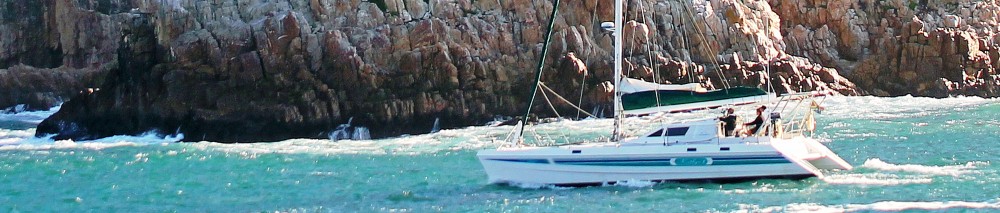
 The 7 day sail was our last long leg and yet entirely different from crossing the Atlantic. We had to be on ‘active’ watch at all times, as we negotiated the shipping channels and played chess with unregistered, illegal fishing vessels that only turned on their lights at the last moment. Dad and I had picked up some or other flu virus that made the unbearably hot days even worst, and made me want to sleep for days. At least we had great sailing and averaged 8.5 knots on Day 2, doing 203 miles in 24 hours, with the help of 1.5 knots of current. The temperature was at 29˚C at 08:00pm at the end of the day, having crossed the equator earlier with all our traditional ridiculousness and we had made the monumental sacrifice of one beer to Poseidon (or Neptune) to keep him in his good natured and jolly mood! We had some strange warm gusts of wind which would come through at complete random and heat up the already stifling days. We were particularly lucky to be joined by dolphins, with 6 or 7 pairs of mother and calf. We put on the deck light and lit up the water in front of us, with them putting on a show of jumps and splashes! Every now and then they would come directly underneath us and turn sideways to get a better look.


 Games of Rummikub, baking bread and reading any book that had not yet reached its 3rd cycle kept us occupied. The large amount of river water entering the Atlantic in this rainy season meant that we lost our turquoise water, as well as our fish.
We had some hassles with our wind instruments, which we picked up when it started acting like a Stellenbosch first year after a particularly good night at the pub. Hilariously so, we reverted to tying red wool on our shrouds to see the wind direction. This was a particular favorite of the Heinz, the 72 year old previous owner who had an enjoyed using the notorious red wool to earmark every process and piece of equipment – Not a favorite of Dads and yet here it was coming into use again! We had a good chuckle at the irony and remembered the quirks that made Papagena uniquely theirs. We also got a few tears in our Genoa from the hank ons on our No.3, which required a ‘en route’ fix to ensure that they did not tear further.
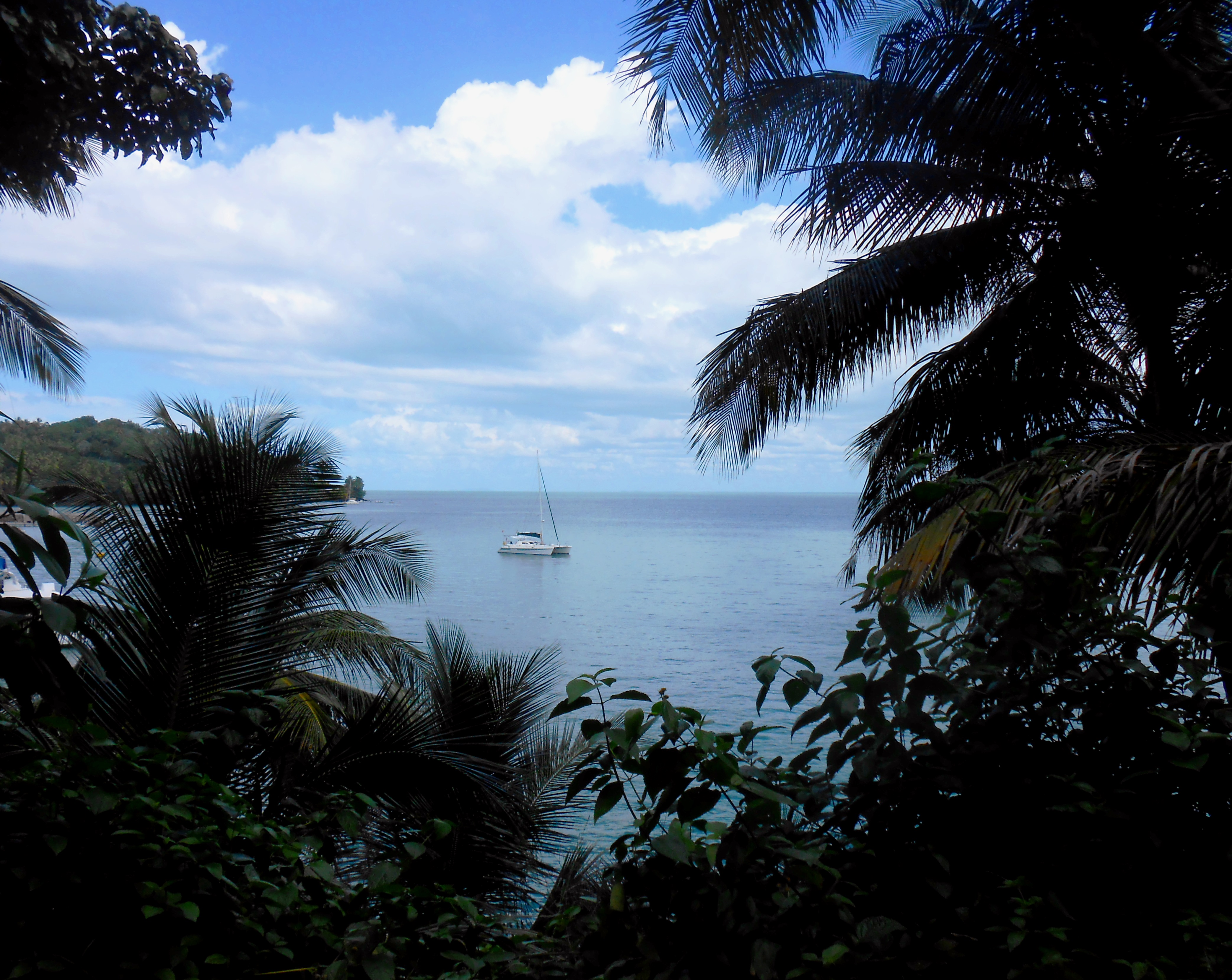
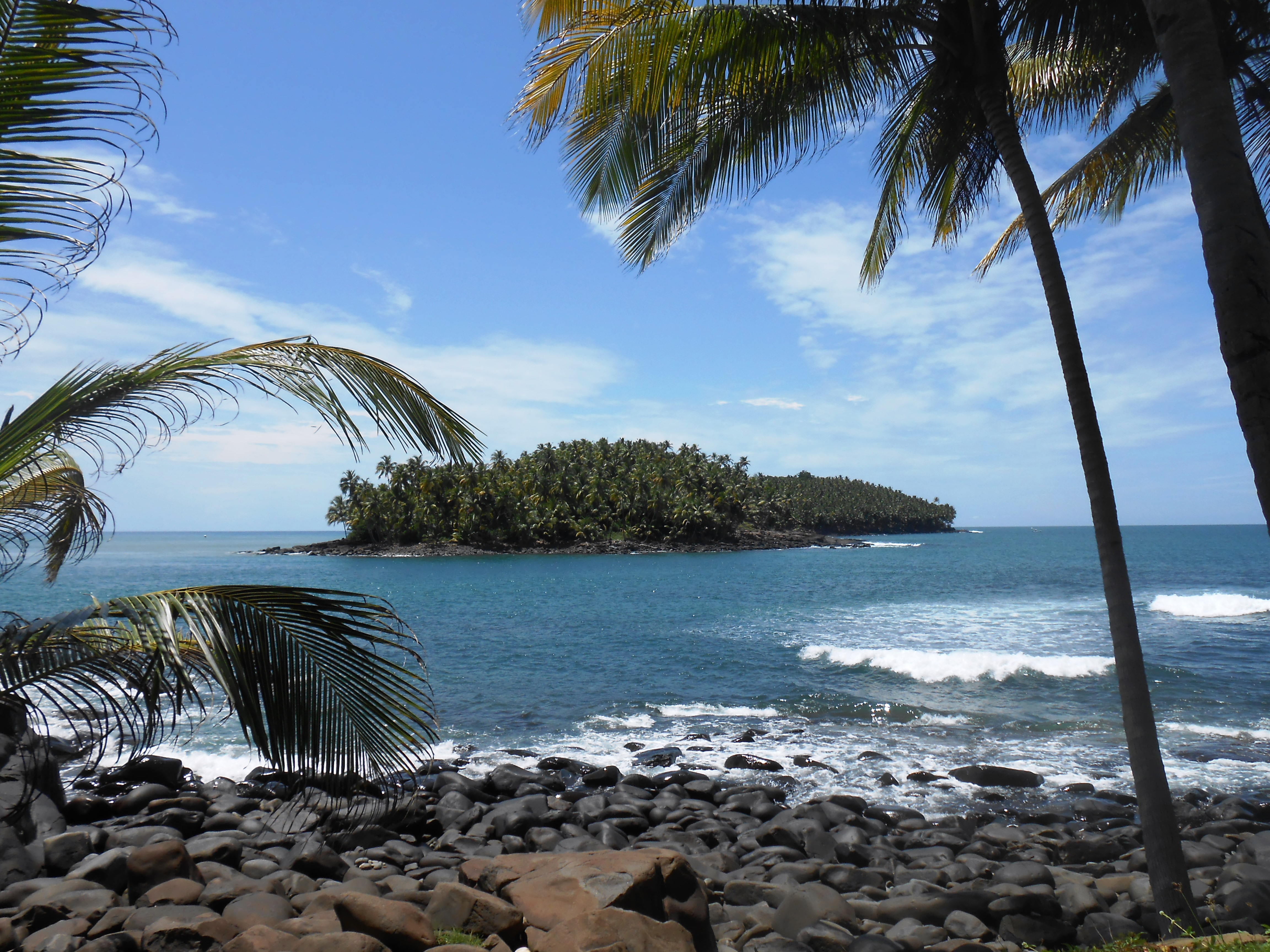
 We arrived at Iles du Salut in the dark on the 4th August, in time for Dad’s Birthday on the 7th. It is made up of 3 islands not 200m from one another, Ile Royale, Ile Saint – Joseph and Ile du Diable (no translation required). Devil’s Island is the smallest of the three, and the group lies about 9 NM (14 km) off French Guyane (Guiana to the French). This island rises about 40 metres out of the sea and is only 14ha, made up mainly of over populated coconut palms, vicious rocks and an undergrowth of re-sprouting coconuts and dead leaves. It was part of the French penal colony for 101 years, till 1953, and favoured by the government of Emperor Napoleon 3rd and so earned its name for being the infamous exile of political prisoners.
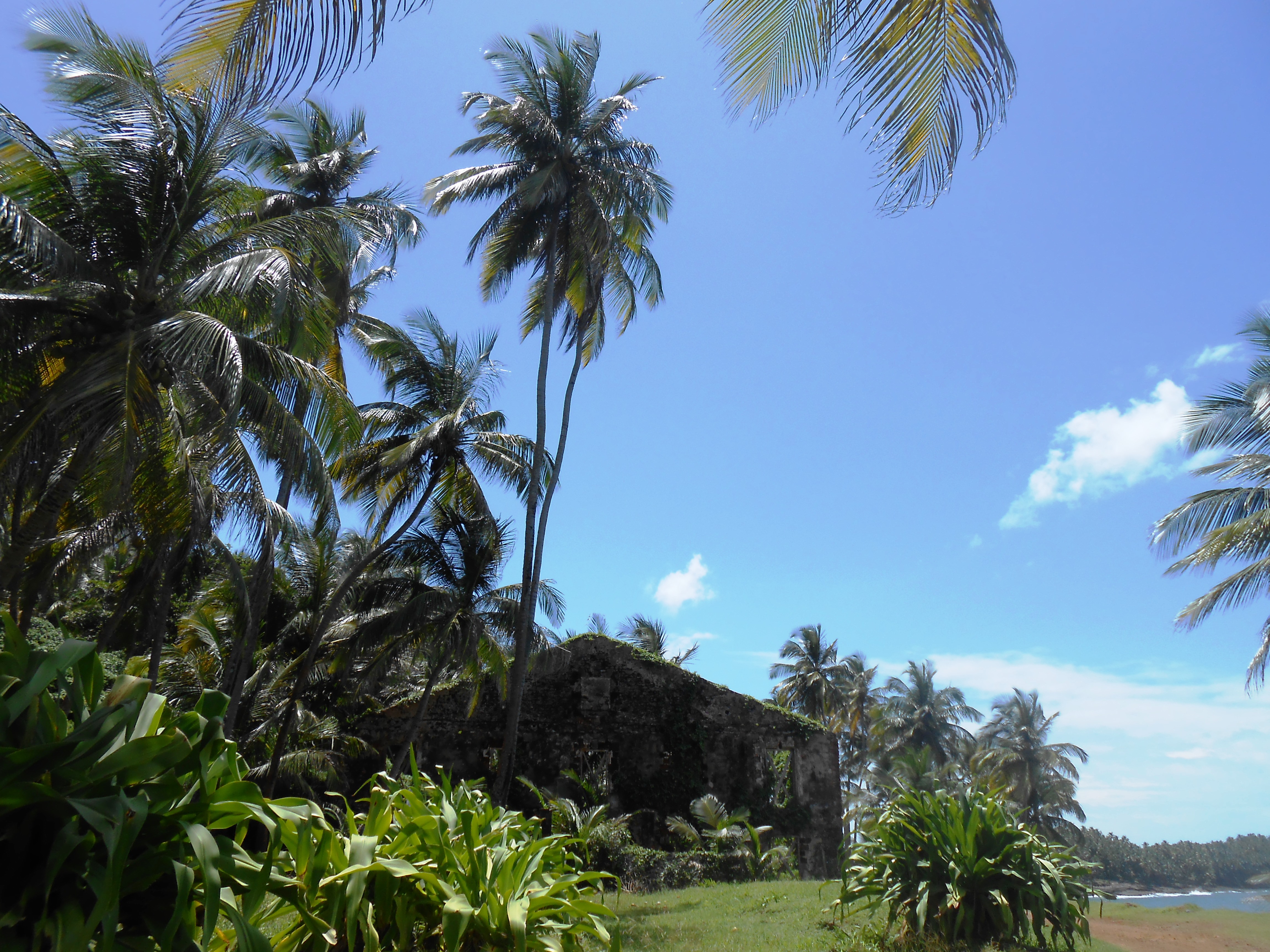 Devil’s Island was originally used to house the leper colony of the prison and since no understanding of the cause of Hansen’s existed, victims were quarantined there until 1895 when they were replaced with France’s political prisoners, and the most hardened of thieves and murderers. Back then Ile du Diable was so perilous that prisoners of Ile Royale constructed a cable car system for officers to reach the island that is surrounded by rocky outcrops, hidden reefs, vicious cross currents and shark-infested waters. Needless to say that the islands were naturally walled in, and those imprisoned for less severe crimes on Ile Royale would be allowed relative freedom. The small prison facility on Ile du Diable did not hold more than 12 convicts. Ile Saint-Joseph held the solitary confinement cells.
 A limited number of convicted women were also sent to French Guiana, with the intent that they marry freed male inmates to aid in settlement and development of the colony. As the results were poor, the government discontinued the practice in 1907. Life in this penal colony gained a reputation for ruthlessness and cruelty, inter – prisoner violence was common, and tropical diseases were widespread. The sanitary systems were limited and the region was mosquito-infested. Only a small minority of broken survivors would return to France to tell how horrible it was and terrify other potential criminals. This system was gradually phased out and has been completely shut down since 1953. The majority of the 80,000 prisoners sent to this penitentiary never made it back to France. The only exit from the island prisons was by water, and few convicts escaped.
 However Clément Duval, a revolutionary, was sent to Devil’s Island in 1886. Having initially been sentenced to death, he received a commuted sentence of hard labour for life on the island where he contracted smallpox, but escaped in April 1901. Duval fled to New York City, where he remained for the rest of his life, eventually recording his imprisonment in a book called Revolte.
Three Frenchmen by the names of Francois Frean, 37, Paul Renuci, 32, Raymond Vaude, 35, and an Italian, Giovanni Batistoti, 35, managed to escape and arrived in the Virgin Islands on 18 October 1936. Their hand made boat was in bad shape and was nearly wrecked on the reef when the convicts were found.
Henri Charrière’s describes his successful escape from Devil’s Island, with fellow inmate, Sylvain in his bestselling book Papillon in 1968. According to his book, the two men threw themselves into a raging sea, using only two sacks filled with coconuts to float and drifted to the mainland over three days. Sylvain periled in quicksand once on shore. This book caused significant controversy, enraging the French authorities with its public descriptions of the extreme brutality and inhumane treatment of the prisoners of Ile du Diable. The Authorities disputed it entirely and eventually released penal colony records that contradicted his account. He had never been imprisoned on Devil’s Island, but apparently escaped from a mainland prison. French journalists and prison authorities found other dubious foundations of his book, believing that he had invented many incidents or adopted experiences of other prisoners. Critics said he should have confessed to fiction.
The nightmare of the penal colony was publicized during Captain Alfred Dreyfus case, where the French army captain was unjustly imprisoned for treason in January 1895. (en.wikipedia.org/wiki/Alfred_Dreyfus). This lead to public outrage in 1938 when Rene Belbenoit published his book, Dry Guillotine, denigrating the penal system. The French government’s plans to close the colony down were delayed during World War 2, but from 1946 until 1953, one by one the prisons were closed. The Devil’s Island facility was the last to be closed. The cable car system deteriorated and the island is closed to public access.
 During 1965, the French government passed on the responsibility of the islands to its newly built Guiana Space Centre. The Islands have to be evacuated during rocket launches as they are under its trajectory. We were bitterly disappointed to have missed a launch not 5 days before we arrived. The islands have all sorts of weird and wonderful apparatus to measure and record the space launches. Now Iles du Salut is a very popular tourist destination, with hordes of charter cats arriving each morning and thankfully returning to the mainland in the afternoon. Facilities have been added, and the old prison buildings restored to receive the 50,000 tourists each year, however only the two larger islands are open to the public. Devil’s Island and the surrounding prisons eventually became one of the most infamous prison systems in history.
 Some of the ruins that we had previously been allowed to explore had been closed off to the public and the daily tourists gave the islands a less ominous feel from last time. Dad spent an afternoon collecting and husking coconut to store on the boat from making cream for curries and to just to chow – we had forgotten how rich they were. I collected shells and whiled away time reading the prisoner tombstones and wandering if their crimes were merely being of a different opinion or something more threatening. The water was never perfectly clear, but still warm and inviting. We went trawling in the mornings on the dingy and consistently caught a variation of Spanish Mackerel, as well as a particularly stupid, rather ugly and impossible enormous Tarpon, which took us some time to get off our line, without it ripping a hole in our pontoons.
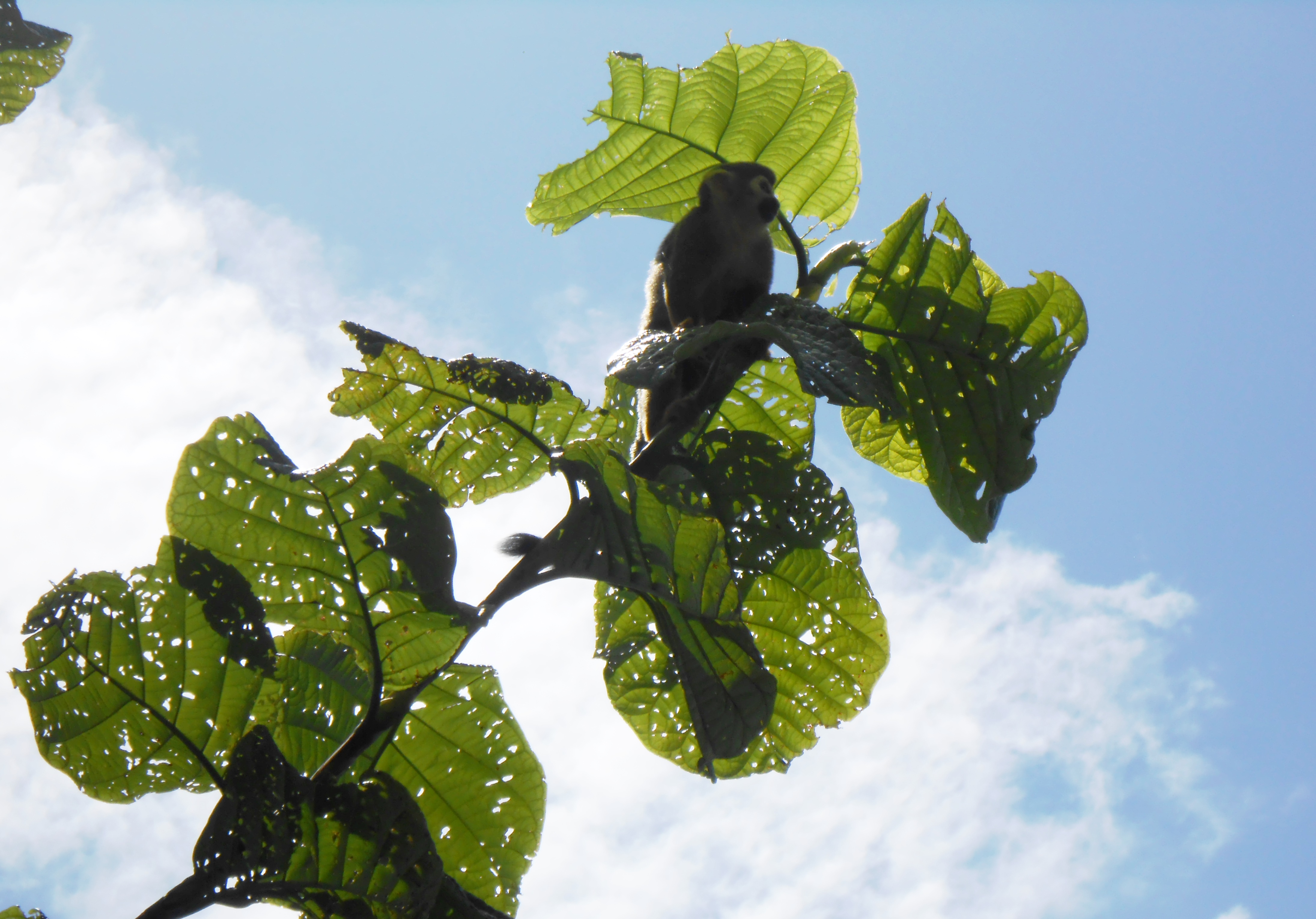 We could hear the monkeys screaming and chattering in the trees from our boat and got some pictures of them on one of our walks. Surprisingly they were not spoilt by the amount of visitors and were neither afraid of us nor aggressive and begging. We got used to the afternoon electrical storms, but our hatches’ seals were seriously put to the test and we had to keep the yacht power off the whole time for fear of shorting out the system. So here I am trying to cook dinner with a hatch dripping water on me, a headlamp on my head and swell knocking us about – naturally it was a culinary masterpiece. Hey, at least we caught a lot of rain water.
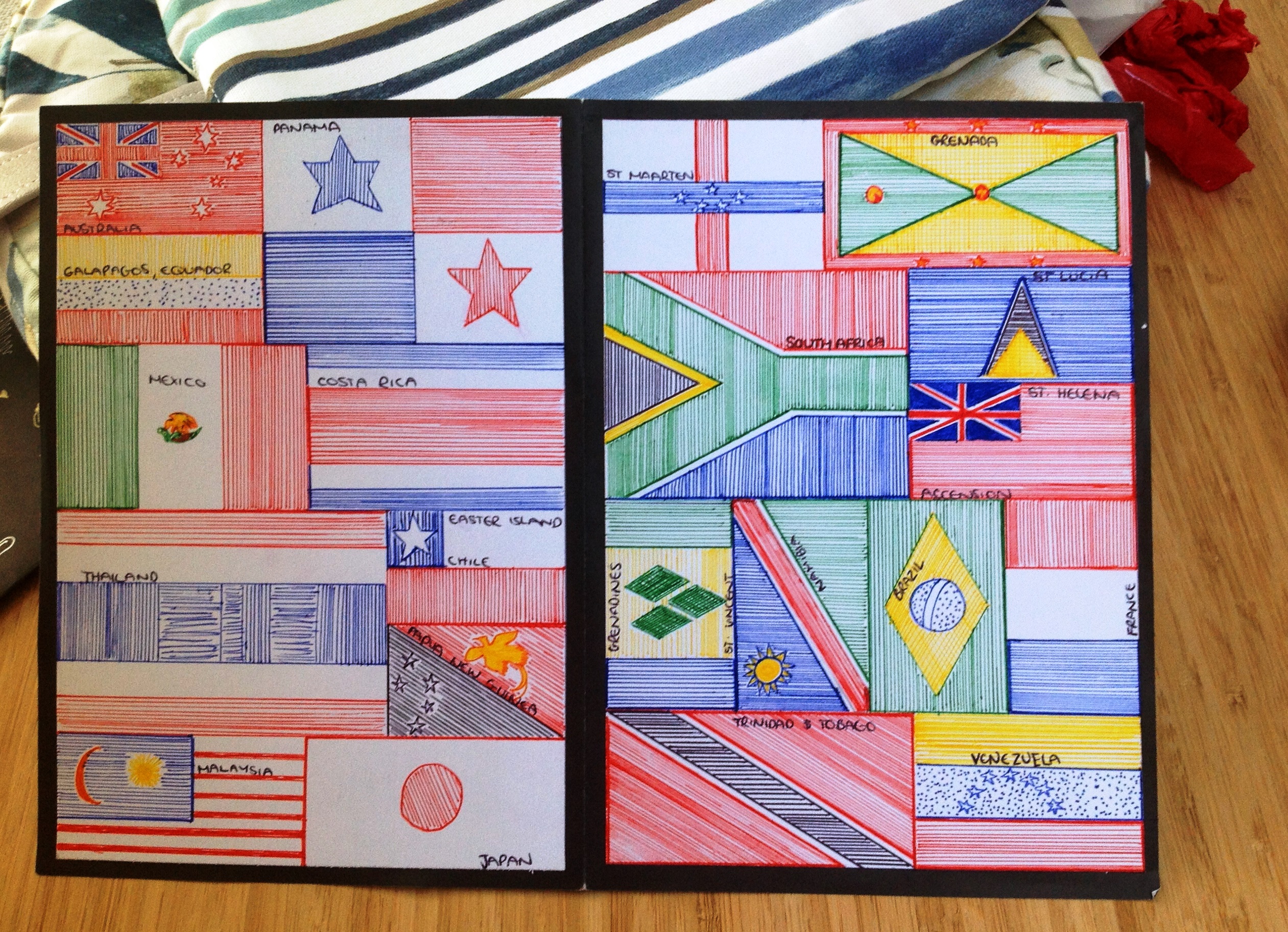 Dad’s birthday was simplistic and relaxing, with a new homemade leather helm cover and beautiful one for the helmsman’s chair. The celebrations were nearly interrupted when a large navy ship pulled in and we were mildly concerned they might come over, considering we had decided not to check into Kourou – Eish!
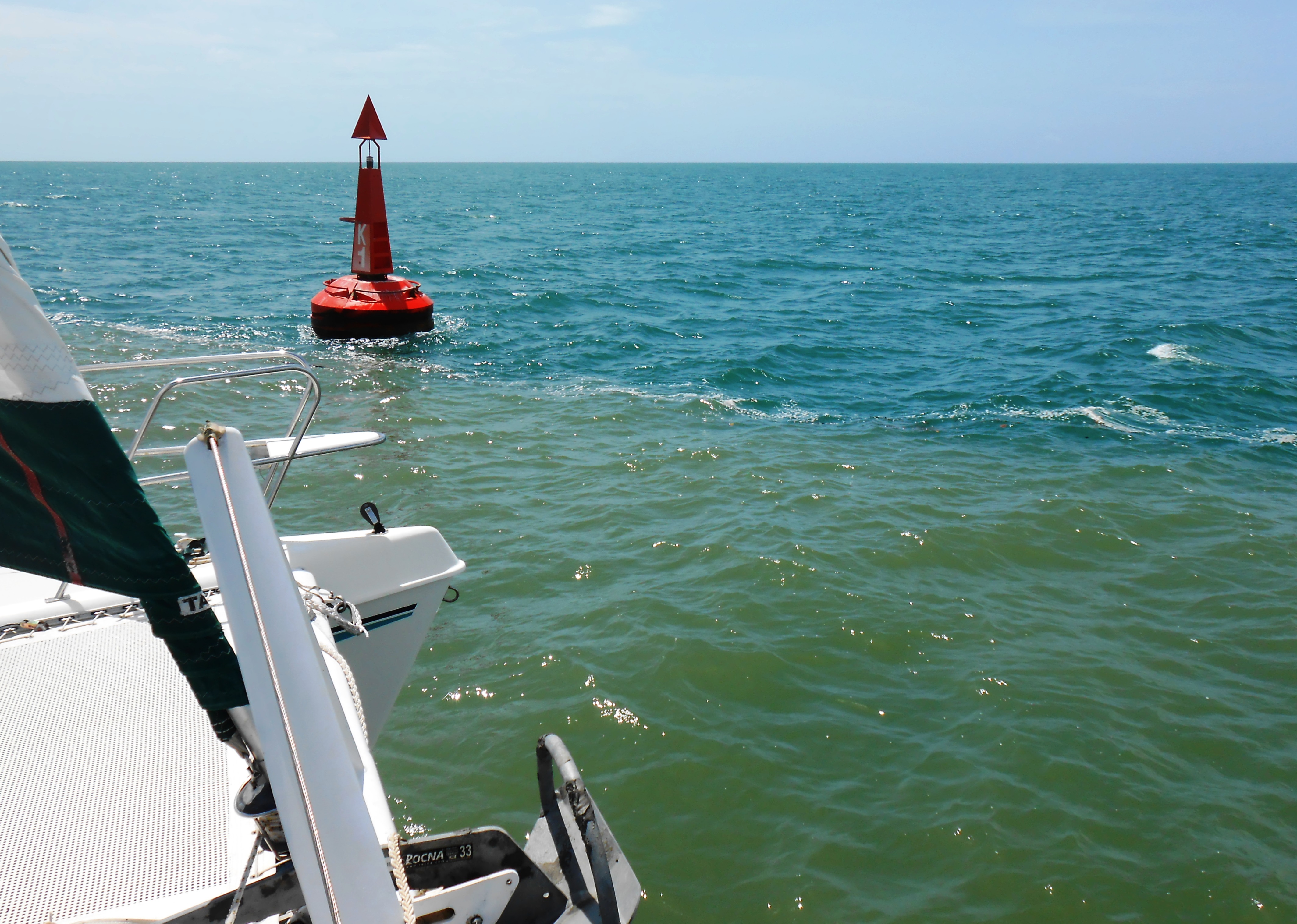
 We took a trip in on one of the days to refill our gas and buy supplies. Our first problem was that the river up to Kourou was pretty hectic and when we weren’t dragging anchor, we were sailing on it; riding over our chain and at times 90˚ to the other boats and dangerously close to shore. Mom volunteered to be on anchor watch and so Dad and I headed into town. It is an arb, dusty patch of earth with foul smelling mud and vultures on the shore – a far cry from the islands lying just off their coast. We were met with the same problem we had had in Brazil of an incompatible gas canister. Have you ever tried to understand a Chinese man that looks about 200 years old, explain to you that they don’t fill American canisters, in French with a Chinese accent? It goes like this ‘Non, non, non, non’! We got the gist… So we got hold of a ludicrously heavy French canister, some fresh veg, beers and a jerry can of petrol only to be told that taxis cannot transport flammables. Y’ell! Thankfully some local guys were filling up and were kind enough to give us a ride in exchange for two cokes. We were in and out in 3 hours in time for the tide to change, and high tailed it back to Iles du Salut and its relative comforts. The next day we started on our final 4 day leg to Tobago, which we were itching to complete as it was the last bit before the Caribbean where island hopping would never be more than a day sail and well… it’s the Caribbean!
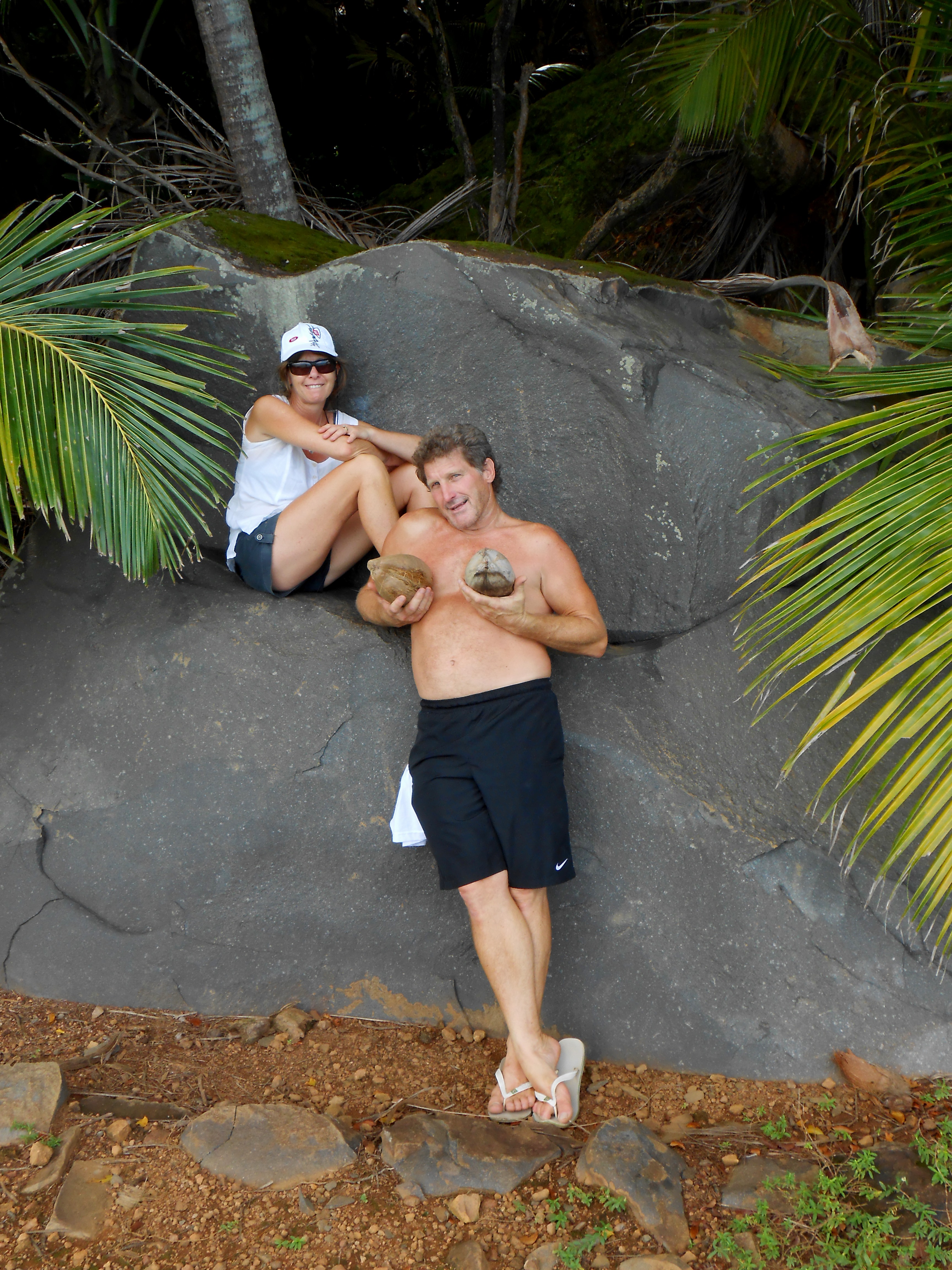 >>>>> Check out the rest of the pictures <<<<<
– Kate
Iles du Salut, French Guyane
(Coconuts, Sundowners, Tourists)
Bargain: The cheap imported french wine and unexpected fresh produce available.
Irritation/Quirk: The main ruins being closed to the public and the ‘no entry’, ‘restricted access’ and ‘no swimming’ signs around every corner.
Cost of a coke: €1.30
 Sailing Katlyn